How it works
The process, from the first contact to the trace
A system that works is not an assistant you ask something of: it is a process that works on the information of the business, every day.
Before, and after
Before
After
The difference is not “speed”: it is that every step has a place, and nothing gets lost between an inbox and a spreadsheet.
Who does the work
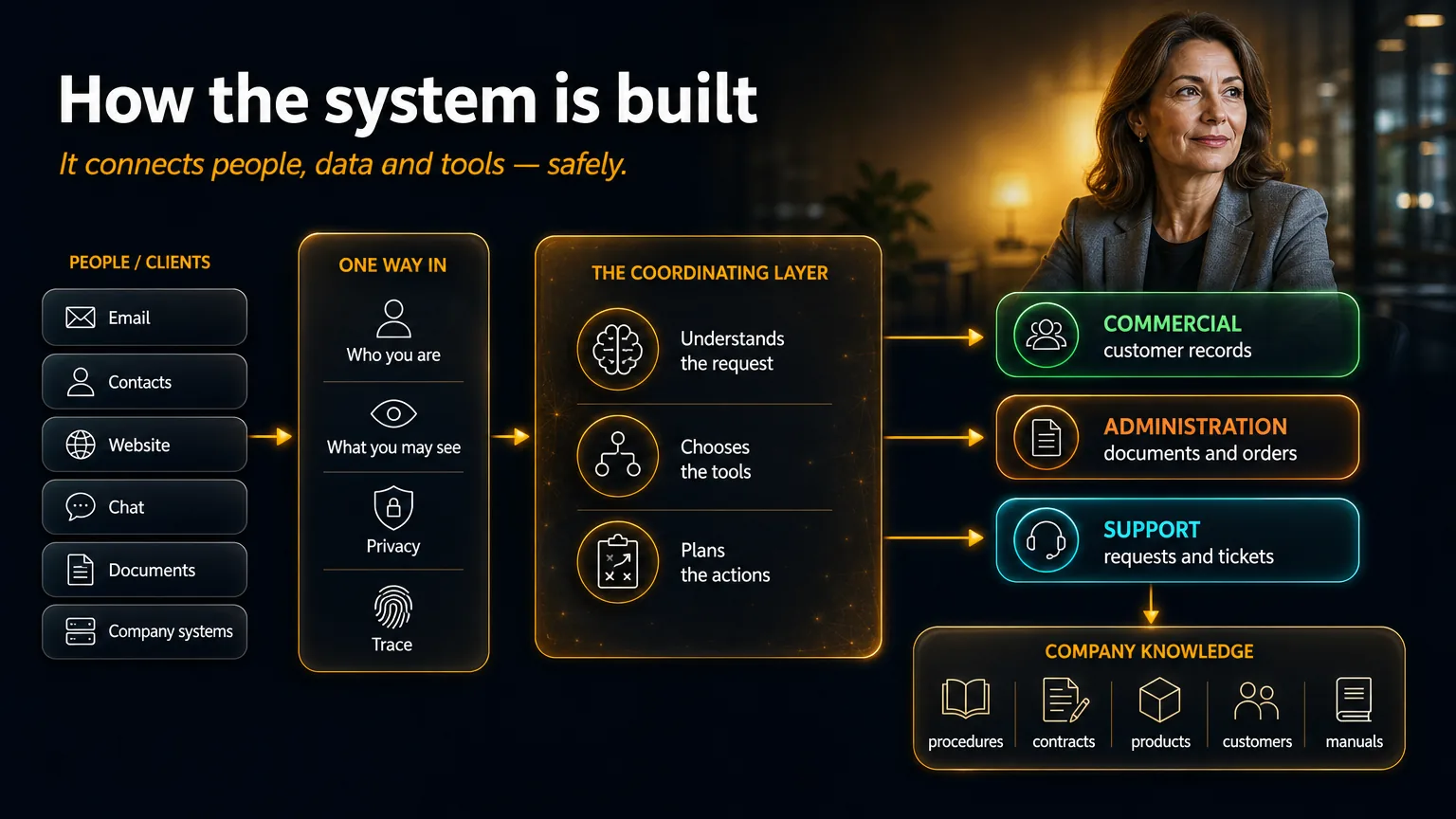
Specialised agents by role — commercial, operations, research, support, administration — coordinated by a layer that gathers the context, weighs urgency and importance, handles the routine, prepares the drafts, and brings a person only the decisions that belong to a person.
Underneath all of it: the company’s knowledge — its documents, its processes, its memory. That is what makes the system that company’s system, and not the same as everybody else’s.
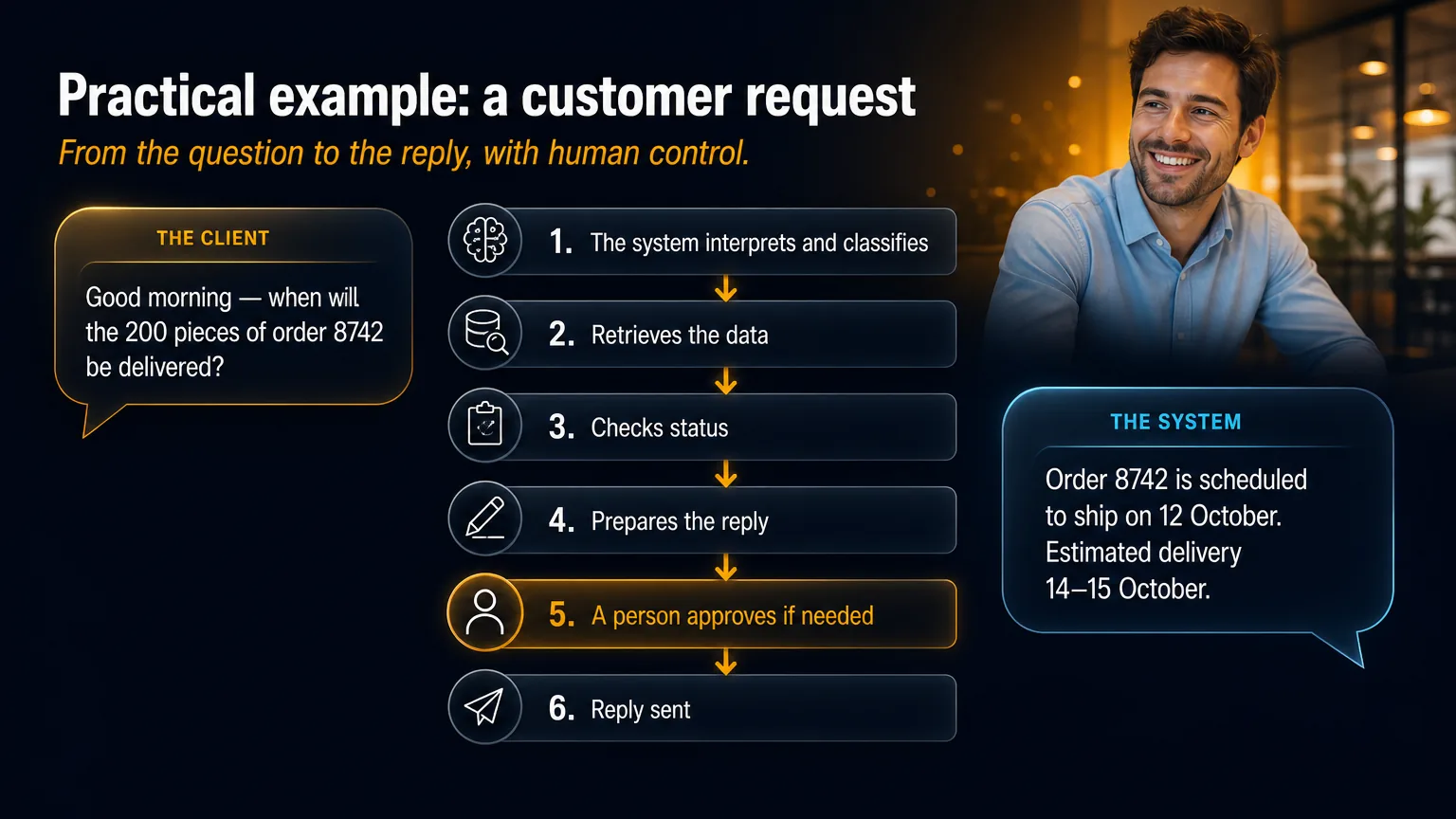
Practical example — a customer request
The client
“Good morning — when will the 200 pieces of order 8742 be delivered?”
The system
“Order 8742 is scheduled to ship on 12 October. Estimated delivery 14–15 October.”
The system interpreted and classified the request, retrieved the data, checked the status, prepared the reply. Because the information was certain and the policy allowed it, the reply went out.
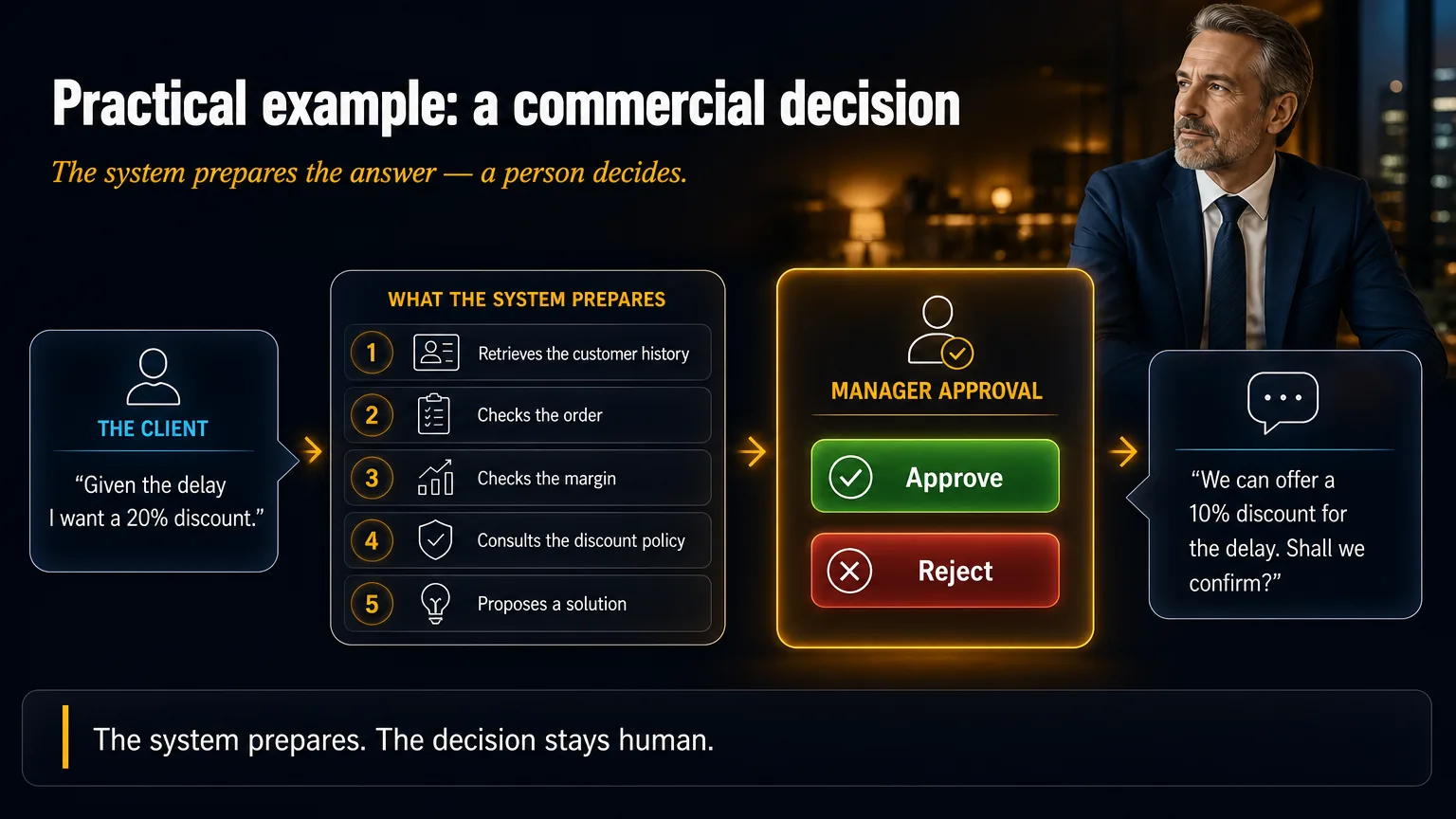
Practical example — a commercial decision
The client
“Given the delay I want a 20 % discount.”
What the system prepares
Customer history · the order · the margin · the discount policy · a proposed solution.
■ Then it stops. Manager approval — reply sent.
The answer that went out was “we can offer a 10 % discount for the delay” — a decision a person took.
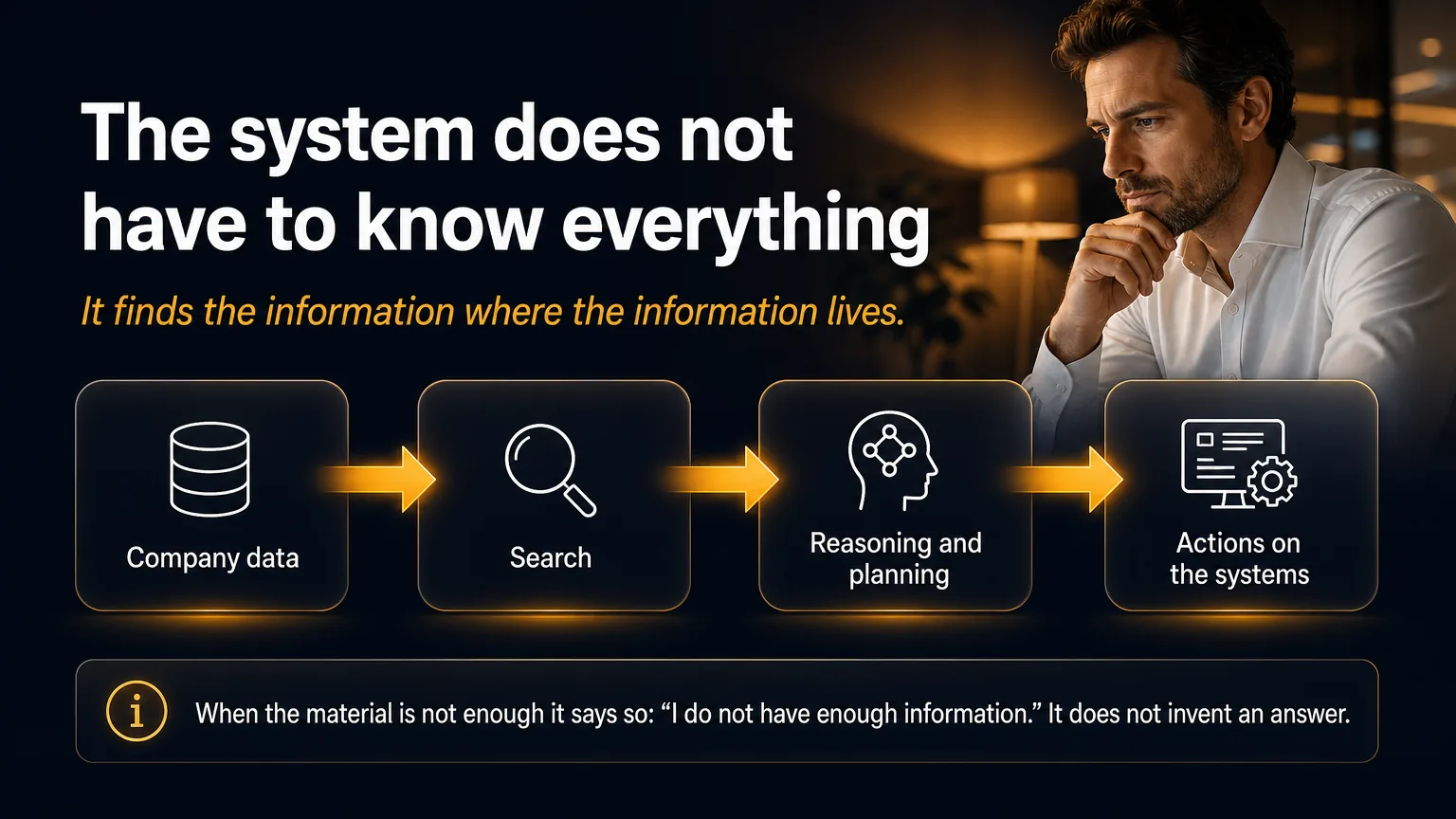
The system does not have to know everything
It finds the information where the information lives: the systems where the company already keeps it. And when the material is not enough, it says so: “I do not have enough information.” It does not invent an answer.
The solution is not off the shelf
The process is the same for everyone — that is how a system that works behaves. The solution is not: it is built on the data and the needs of that business.
First we gather the real material — how the company works today, what it reads, what it produces, who decides, where time is lost — and then we design. The result is different for every company, because it is built inside the way it works, not on top of it.
And for the same reason we do not promise figures in advance: how many requests, how many hours, how many errors avoided are measured on your process, once the system is in use. Before that they are estimates, and we do not put estimates on a website.